


The Best of Flow Reps. Straight to your inbox.
A Monthly Email Packed With SOLUTIONS! Not decision.
Thank you! Your submission has been received!
Oops! Something went wrong while submitting the form.

Q&A Resource
Quick Answer
Butterfly valves are often grouped by their body/connection style such as lug and wafer. These mechanical components are not interchangeable and have distinct advantages and applications.
The primary difference between lug and wafer butterfly valves is how they mount between pipe flanges.
This difference affects installation, maintenance, dead-end service capability, cost, and mechanical support. While both styles can provide similar flow control and shutoff performance, the best choice depends on the application.

KEY TAKEAWAYS
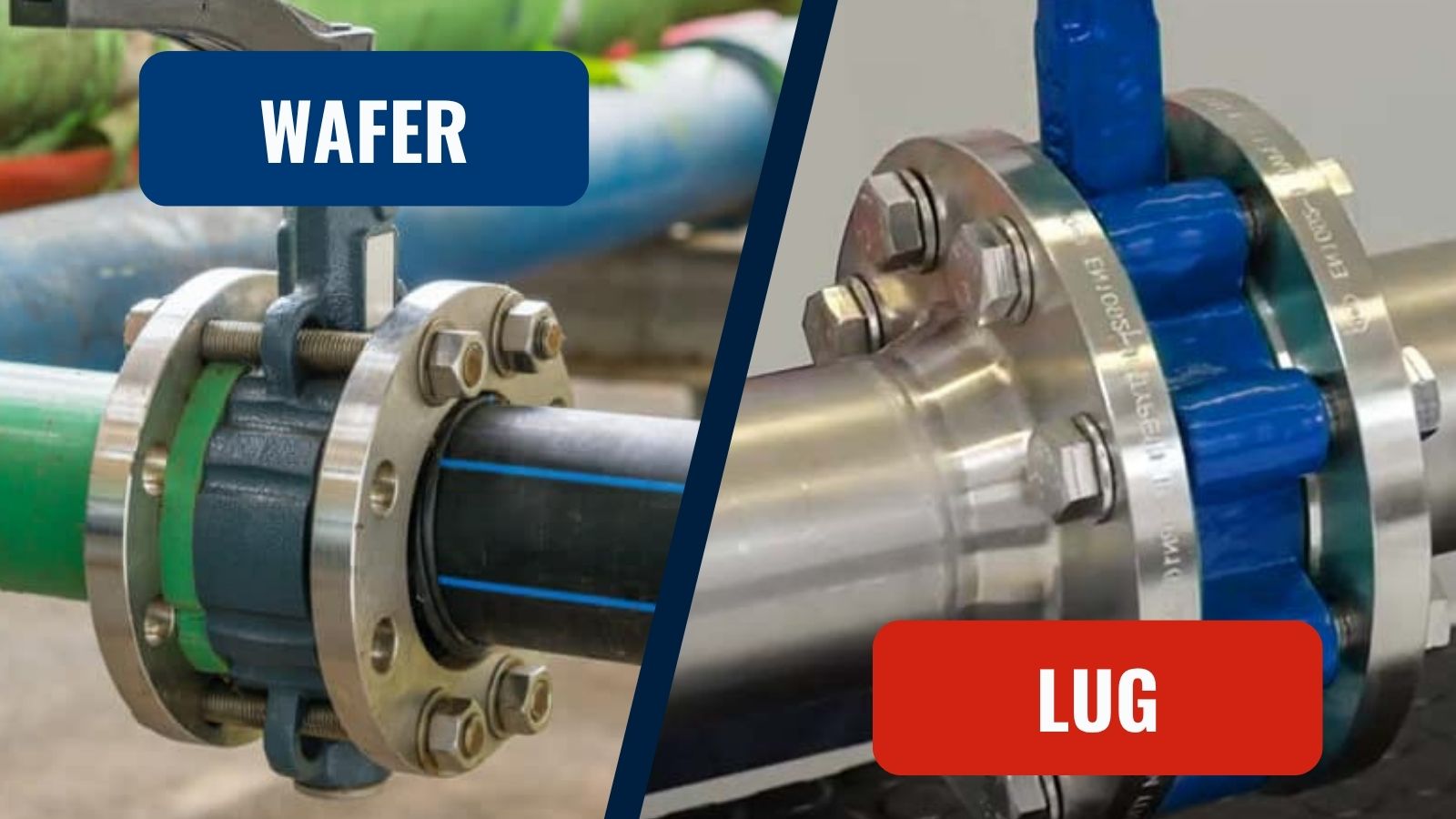
Butterfly valves are often grouped by internal sealing design—such as concentric (resilient seated), double offset, or triple offset—or by the style in which the valve is mounted into a piping system such as lug-style and wafer-style. It's important to understand that these are independent classifications and do not compete with one another. Instead, they work together to describe a different characteristic of a valve and together provide a more complete description of a butterfly valve.
Choosing between a lug and wafer butterfly valve affects:
Although the two styles often look similar internally, their body designs make them suitable for different piping systems and maintenance strategies.
A wafer butterfly valve is designed to fit between two pipe flanges.
Long bolts extend through:
The flanges clamp the valve securely into position.
Because the valve depends on both flanges for support, removing one side of the pipeline generally leaves the valve unsupported.
A lug butterfly valve has threaded or through-hole lugs cast into the valve body.
Each pipe flange bolts directly to the valve independently.
This allows the valve to remain securely attached even if one side of the piping is removed.
Yes. Both wafer and lug butterfly valves are commonly used for:
The body style does not determine whether the valve can throttle flow or provide shutoff. Those characteristics depend primarily on the valve's seat design, disc geometry, pressure class, and intended service.
One of the most significant practical differences between the two styles is dead-end service capability.
Many lug butterfly valves are specifically designed to hold full system pressure while downstream piping has been removed while wafer valves rely on both pipe flanges to support the valve body and seat.
This makes lug style valves popular for placement anywhere equipment requires periodic maintenance.
Always verify the manufacturer's dead-end pressure rating and installation requirements.
Neither design is universally better.
The best choice depends on the application requirements. The body style primarily affects installation and maintenance—not flow performance or shutoff capability. Pressure ratings, valve sizes, and installation requirements vary by manufacturer. A wafer and lug butterfly valve from the same manufacturer often use the same disc, stem, and seat design.


